DRC’s Ebola Crisis Deepens as Case Count Tops 4,000
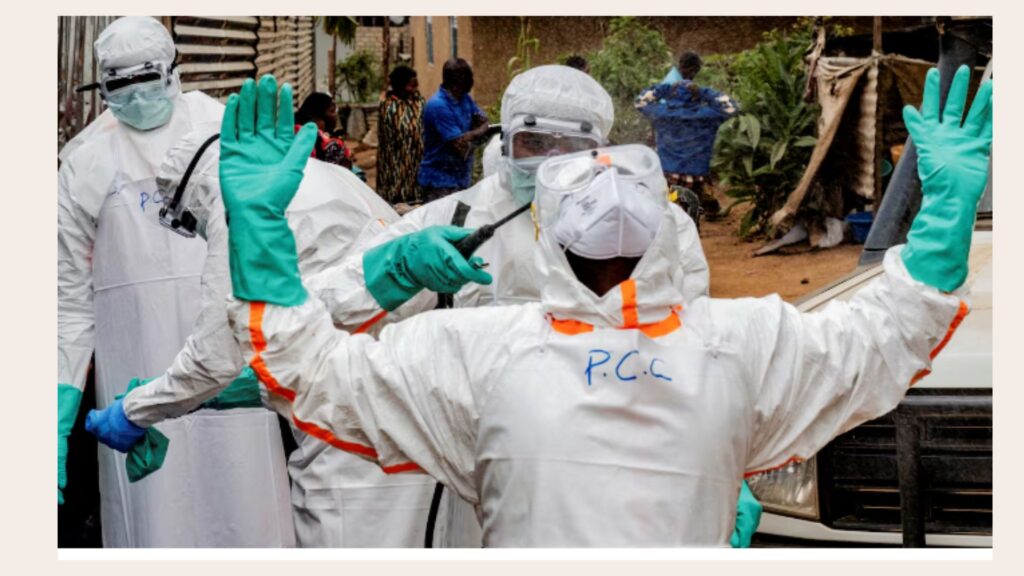
A picture of Ebola frontline rescuers n Congo as they prepare for a rescue operation of asn Ebola victim
The Democratic Republic of the Congo is grappling with what has become the second-largest Ebola outbreak in recorded history, with confirmed infections now exceeding 4,000 and no clear end in sight, even as global health officials scramble for a scientific breakthrough against a strain the world has never had to vaccinate for before.
According to the Ministry of Health, 4,053 cases of the Bundibugyo Ebola strain have been recorded since the epidemic began on May 17 with over 1,850 deaths, The outbreak is said to be the deadliest of its kind in history: a nearly three-year outbreak that plagued West Africa from 2014-2016 and ultimately resulted in over 28,000 cases across Guinea, Liberia and Sierra Leone.
Also Read…
WHO recommends trial of licensed Ebola vaccine, Ervebo
U.S. sends seven Americans from Congo to Laikipia Ebola facility
Kenya sets mandatory $50,000 health insurance cover for incoming visitors
Kenyan Professor Kenneth Ngure appointed to WHO
Ebola epidemic stands out in two critical ways: the sheer number of victims, but also the rapid speed at which the disease has traveled. “The fastest spreading in history” is how officials are describing the outbreak, and many experts believe the actual number of infected is higher, due to difficult tracking efforts in many rural, underdeveloped areas.
So far, the virus has spread through 53 health zones across 5 different provinces — Ituri, North Kivu, South Kivu, Haut-Uele, and Tshopo — and has overwhelmed both Ituri Province (87%) andneighbor North Kivu (11%) with recorded cases.
Difficulty in containing the epidemic has been increased by an ongoing armed conflict which has impeded surveillance, diagnostic efforts and treatment for victims. “Furthermore,” one report reads, “no licensed vaccine currently exists for this strain of Ebola-Bundibugyo, while [vaccines for Zaire] are already approved and effective against the zair Ebola strain, which comprises > 99% of historically registered human cases.”
Regulators Weigh a Repurposed Vaccine
A major turning point occurred when WHO vaccine advisors announced they are strongly recommending that Ervebo, the only Ebola vaccine currently available and approved, be tested in large-scale human trials to see if it can effectively protect against Bundibugyo. The vaccine for the zair strain has proven effective at preventing deaths and infections for humans, and limited research-based evidence — many drawn from animal trials — show promising indications it might protect against this more obscure variety as well.
The data supporting this hopeful finding come from a multitude of studies: four out of four monkeys received Ervebo and survived Bundibugyo exposure as opposed to just one out of four untreated animals. In a separate, unpublished study on ferrets, one formulation of the research-grade vaccine entirely protected the animals against the strain; none of the un-treated animals in the same trial survived more than ten days past exposure.
Based on this promising data, a WHO panel has issued the recommendation to include Ervebo in randomized human trials relating to this epidemic response.
Caution Amid the Optimism
However, and according to a statement issued by the UN agency’s Technical Advisory Group on Candidate Vaccine Prioritization, a purpose-built vaccine for this strain of Ebola is still “the ideal scenario,” and urges that the organization does not hasten forward without greater evidence. The group noted it is entirely possible for the results of large-scale human Ervebo trials to only show “a modest benefit” in preventing infection or spread, but still benefit recipients by reducing fatalities due to the disease itself.
Currently, two experimental vaccine candidates targeting the Bundibugyo strain are in early stages of human testing and a third is nearing that phase.
Mobilizing Vaccine Stockpile
The Gavi Vaccine Alliance confirmed its reserve of some 500,000 doses of Ervebo have begun and will continue to be distributed to assist with upcoming trials. Some of the stockpile has already been delivered to the DRC, and has begun its travel to assist aid workers.
“The fact that this outbreak has already become the worst recorded in the Democratic Republic of Congo and shows no sign of abating further,” states Gavi’s chief executive Sania Nishtar, “means we are in uncharted territory,” but said the possibility of Ervebo alleviating severe illness and death for victims offers “a faint gleam of hope.”