Kenya could have saved KSh116 billion on SGR construction – World Bank
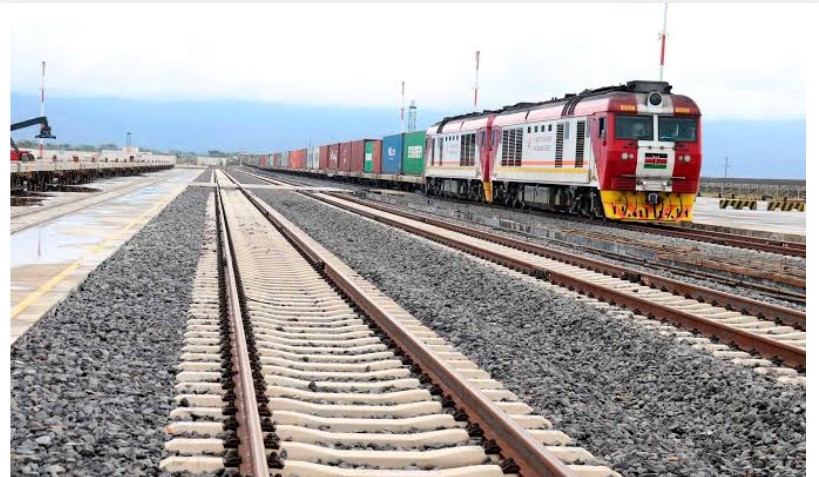
Kenya could have saved KSh116 billion on SGR construction - World Bank
A comparison of railway construction costs in East Africa suggests that Kenya could have saved approximately KSh116 billion (US$900 million) on the initial construction of the Standard Gauge Railway (SGR) between Mombasa and Nairobi if it had been built at a cost comparable to Tanzania’s Dar es Salaam–Dodoma railway.
The cost comparison is highlighted in the World Bank’s Kenya Economic Update report released on Wednesday, November 4, 2026.
According to the report, Kenya’s Mombasa–Nairobi SGR cost approximately KSh988 million (US$7.6 million) per kilometre, compared to KSh741 million (US$5.7 million) for Tanzania’s Dar es Salaam–Dodoma railway and KSh689 million (US$5.3 million) for the Djibouti–Addis Ababa railway.
The international lender attributed a significant portion of Kenya’s higher construction costs to governance challenges, rather than topographical or technical differences.
Specifically, the report identified the preference for direct contracting over competitive tendering, land speculation, and outright fraud involving land titling, valuation, and compensation payments.
“With the same cost metric as the Tanzanian line, Kenya could have saved up to US$900 million in initial construction costs. Of this amount, at least 30 percent is considered attributable to governance challenges,” the report noted.
The report also referenced a 2026 Transparency International Kenya report, which used the Infrastructure Corruption Risk Assessment Tool (ICRAT) to identify the SGR project as particularly vulnerable to corruption.
According to the draft 2027 Budget Policy Statement released by the National Treasury in October 2026, Kenya borrowed approximately KSh648 billion (US$5 billion) from China to finance the construction of the SGR from Mombasa towards Naivasha.
Beyond the railway project, the World Bank identified the awarding of public contracts to companies connected to government officials as a significant governance challenge in Kenya.
The report noted that government agencies sometimes preferred direct procurement over competitive tendering. Some Public-Private Partnership (PPP) projects also emerged from unsolicited proposals without full transparency.
“Once contracts are awarded to connected companies, this also raises the likelihood of further collusion and cost markups during project execution,” the report stated.
Kenya’s Phoebe Okowa re-elected (International Court of Justice) ICJ Judge
KRA guard charged with stealing Ksh.22.7M worth cigarettes in warehouse
Second body retrieved from Eastleigh building as rescue operation continues
Government announce recruitment of Chiefs and Assistant Chiefs
Don’t speak to me like I’m your child’ – Gachagua claps back at Matiang’i and Muturi
The lender warned that such practices increase the cost of public projects and place additional financial pressure on the government.
Kenya’s power purchase agreements (PPAs) with independent power producers were also identified as an area requiring greater scrutiny.
A 2021 assessment by the Energy and Environmental Development Advisory and the Energy for Growth Hub found that only 24 per cent of 42 PPAs signed by Kenya Power were known to have undergone competitive procurement.
The World Bank called for greater transparency in power purchase agreements, public procurement and beneficial ownership information to establish the individuals who ultimately own companies receiving government contracts.
At the other end of the corruption chain, the World Bank warned that informal workers frequently face demands for bribes from traffic police, county inspectors and other frontline government officers.
The report estimated that informal workers could lose up to 20 per cent of their daily earnings through such payments.
Boda boda riders, in particular, reportedly spend 5 to 20 per cent of their daily earnings on bribes, about KSh50 to KSh100 per day.
The World Bank also cited estimates indicating that payments to traffic police across the country amount to approximately KSh88 billion annually.
To address the problem, the lender proposed fully implementing reforms to decriminalise minor traffic offences and introducing a system of instant fines.
World Bank upgrades Kenya’s 2026 economic growth forecast
Public Service Commission exposes fake letters promising permanent govt jobs
Kwale residents return title deeds handed by Ruto over irregularities
KTDA appoints new board chairman
KCSE student dies moments after sitting first papers in Homa Bay