Babu Owino, LSK Vice President Move to Court to Bar Cabinet Secretaries from Engaging in Politics
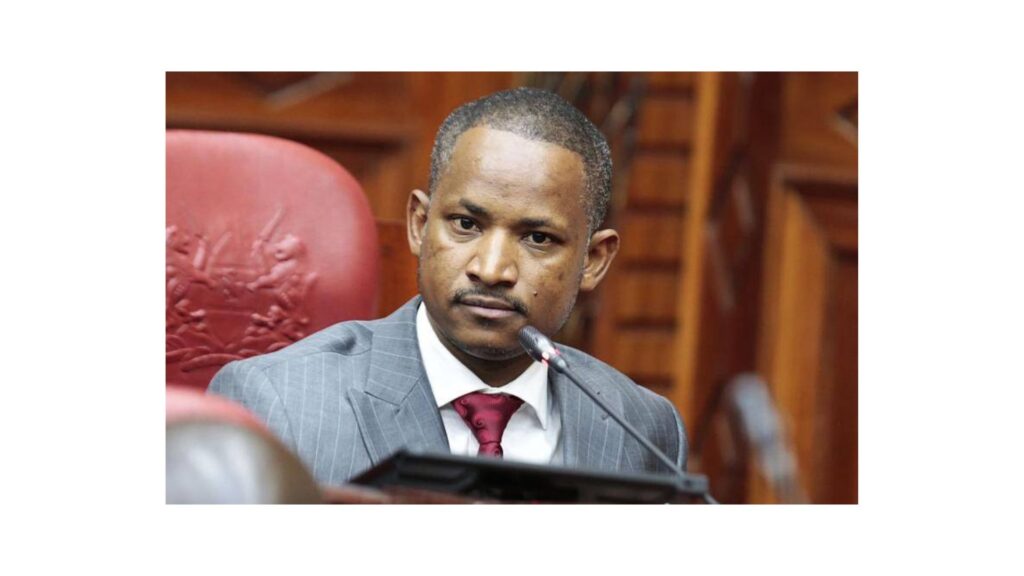
Embakasi East Member of Parliament Hon. Babu Owinu during a proceeding in the parliament
Embakasi East Member of Parliament Babu Owino and Law Society of Kenya (LSK) Vice President Mwaura Kabata have filed a petition at the Milimani Law Courts challenging a section of the recently enacted Conflict of Interest Act, 2025, which they argue unlawfully permits senior government officials to participate in politics.
The petition specifically contests Section 25 of the Act, which allows Cabinet Secretaries (CSs) and County Executive Committee (CEC) members to engage in political activities, a provision the petitioners say undermines the constitutional principles of neutrality and fairness in the public service.
According to Owino and Kabata, Section 25 is unconstitutional and discriminatory, as it grants immunity to high-ranking government officials while subjecting ordinary civil servants to strict neutrality rules.
The petitioners argue that the law creates a double standard within the public service, thereby weakening the integrity of governance and violating key constitutional provisions.
ALSO READ
MKU Student Charged with Hacking Sidian Bank in KSh7.8 Million Cyber Theft Scandal
KNEC Introduces Smart Digital Locks that tracks Operations on Exam Containers
92-year-old Paul Biya Wins Controversial Eighth Term as Cameroon’s President
They maintain that Article 75 of Kenya’s Constitution explicitly requires all state officers to avoid conflicts between personal and public interests. By allowing Cabinet Secretaries and CEC members to engage in politics, they contend, the law directly violates this constitutional requirement.
“The law not only erodes impartiality but also opens the door for political interference in the operations of government institutions,” the petition states. The duo further warned that the selective exemption creates a dangerous precedent, threatening the rule of law and the principle of equality before the law.
Petition Filed Under Urgency
The petition seeks conservatory orders to immediately bar Cabinet Secretaries, County Executive Committee members, and other senior state officers from participating in any form of political campaign or partisan activity until the matter is determined by the court.
The legislators also want the Attorney General restrained from implementing or defending the contested section of the Act.
Babu and Kabata cited an incident on April 2 in Kieni, Nyeri County, where several state officials allegedly attended and participated in a political rally. They claimed the event demonstrates how Section 25 is already being exploited to justify overt political involvement by senior government officers.
“This is a clear example of how state power can be abused under the guise of legal exemption,” they argued, emphasizing that such actions compromise the neutrality of public institutions and blur the distinction between state and party politics.
The petitioners are urging the Judiciary to act decisively in protecting constitutionalism and maintaining the integrity of Kenya’s public service. They assert that allowing political involvement by state officers erodes public confidence in government institutions.
They are calling for Section 25 to be declared unconstitutional, null, and void, and for the court to issue a permanent injunction barring all state officers, regardless of rank, from taking part in political campaigns or activities.
Background of the Law
The Conflict of Interest Act, 2025 came into effect on August 19. The law was designed to regulate ethical conduct among state officers and prevent situations where personal interests could influence official duties.
However, Section 25 of the Act introduced an exemption for Cabinet Secretaries and County Executive Committee members, allowing them to engage in political activities under certain conditions.
Babu Owino and Mwaura Kabata argue that this exemption contradicts not only the Constitution but also the Leadership and Integrity Act of 2012, which emphasizes fairness, impartiality, and accountability among public officers. They further stated that the exemption undermines efforts to professionalize the public service and opens the door to politicization of government operations at both national and county levels.
The case, which is now before the Milimani Law Courts, seeks to reaffirm the constitutional principle that state officers must serve all citizens equally, regardless of political affiliation. The petitioners expressed confidence that the Judiciary will uphold the rule of law and ensure that Kenya’s governance remains anchored in integrity and transparency.
If successful, the case could significantly reshape how political engagement among top state officials is handled and reinforce the separation between governance and partisan politics in Kenya.