Kenya Urges Fresh Investment in Cement Industry as East African Portland Faces Stake Sale
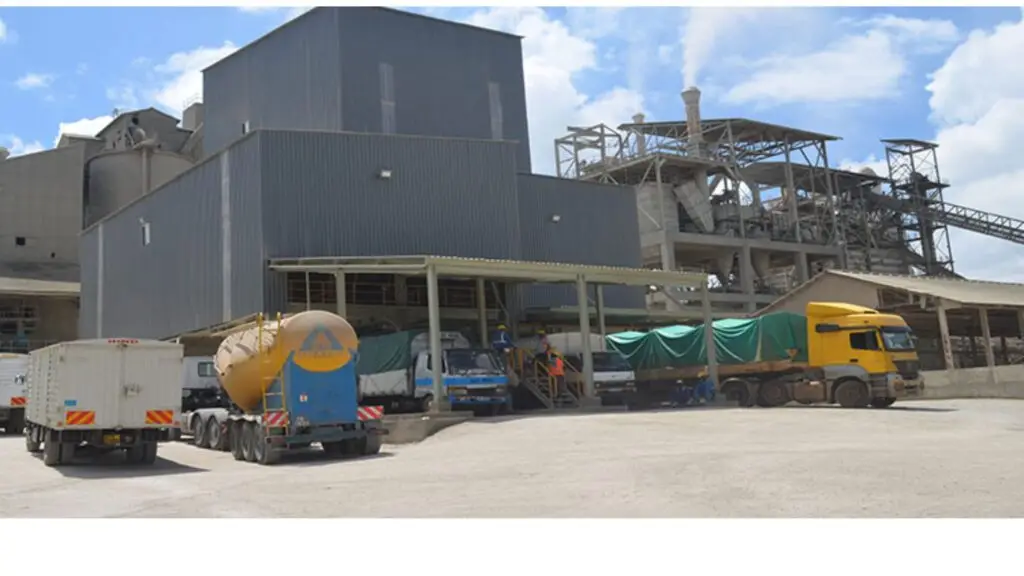
A section of the East African Portland Cement industry
The Kenyan government has recommended a new investment in the cement industry in Kenya, as the East African Portland Cement Company (EAPCC) undergoes significant ownership transitions and faces financial losses.
When questioned by the Committee on Trade of the National Assembly, Dr Juma Mukhwana, the Principal Secretary of the State Department of Industry, confirmed that Swiss-based Holcim was divesting its shareholding in EAPCC. Its 29.7% stake has been sold to Kalahari Limited, which the government believes will make a significant contribution towards the restoration of the ailing cement manufacturing company.
Also Read
Kenya Suspends Avocado Sea Exports to Protect Crop Quality and Market Standards
US Extends AGOA Trade Deal for One Year, President Ruto Announces
Long-Serving Crown Paints CEO Rakesh Rao Steps Down After 20 Years, Mustafa Turra Appointed Successor
Dr Mukhwana maintains the firm only dominates below 10% of the Kenyan cement market share, however the product sees stinging demand as a result of ongoing infrastructure as well as property developments. He encouraged local entrepreneurs as well as international investors to exploit the potential in the industry.
Says Dr Mukhwana, cement consumption in Kenya is very high, and the sector therefore pose a very good opportunity for investors who want to ramp up production and normalize supply.
Despite the difficulty of these attempts to revive the company, a dark cloud still lingers over it. Both current and former employees have accused management of mishandling the company’s resources and failing to consider the welfare of the staff.
He was an employee who was assaulted by the management of the company after accusing the company’s leadership of mismanaging at senior levels. He referred to instances of layoffs of workers without compensation and controversial land allocations that were reportedly not well documented.
Mutherian cited the company that has been firing employees without paying them their dues, land has been given away through bad decisions, and the government needs to step in by reorganising the leadership.
The grievances of the employees have leaked over into the courts. Peter Mirrie, an advocate with Kicking and Company Advocates who is representing the workers, revealed that at least two high-profile cases are pending against the cement producer. ELCA Cause No. 202 of 2014, in which the court awarded the staff members KSh 1.4 billion in compensation in 2015. To date, however, KSh 110 million has been paid out, leaving the rest still to accumulate interest.
The implementation of the ruling has already begun, with some of EAPCC’s fixed assets being taken over under prohibitory orders as workers pursue justice.
Such a combination of economic distress, judicial conflicts, and market share erosion presents a highly uncertain future for the once-leading cement maker. Absent some substantial injection of fresh capital and sound corporate governance, commentators feel the company will not fare well in returning the company to its past standing within the industry.
With the expansion of infrastructure construction as well as residential development in Kenya, the government claims there is ample space in order to grow the cement industry. The East African Portland Cement, however, will survive and revive depending on whether it can settle its long-standing disputes and attract new investment to resume operations.