Opposition Sounds Alarm on Kenya Pipeline Privatization, Cites Corruption Concerns
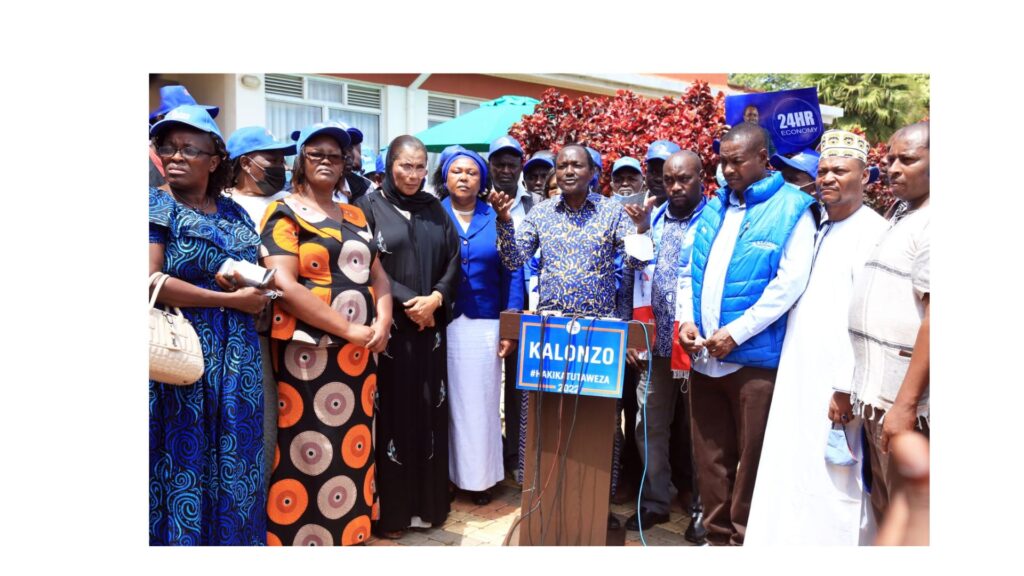
Former DP Kalonzo Musyoka and other wiper counterparts addressing the media
The Kenya opposition has expressed grave reservations against the move by the government to privatize major state owned companies such as the Kenya Pipeline Company (KPC), to act as a caution to potential investors. The caution is issued as the Kenya Kwanza government continues with its privatization process, a move that critics in the opposition cite as one that is steeped in corruption and uncharacterized by openness.
Friday, October 3 The opposition leaders met in Ilbissil, Kajiado Central, to back Democracy for the Citizens Party (DCP) candidate Simon Sanare, before the mini-polls in the Purko Ward are due on November 27.
Also Read
Kenyan Entrepreneurs in Tanzania Exempted from Suluhu’s Restrictions on Certain Foreign-Owned Businesses
Trump gives Hamas a 6 p.m. Sunday ultimatum to accept Gaza deal — warns of unprecedented retaliation
Ruto Appoints John Cox as Registrar of Political Parties, Names New Diplomats and KNCHR Chair
Although the rally was supposed to be dedicated to the local elections, opposition leaders took the podium to criticize the William Ruto government on various controversial matters such as alleged corruption, extrajudicial killings, arbitrary arrests, and the selloff of state owned corporations.
Former ally of President Ruto became an outspoken opponent, Justin Muturi, was among the first to suggest that the alleged malpractices of the current administration would put the president in court in case the opposition reclaims power in the 2027 elections. Muturi gave a stern warning that he would not forgive the atrocities under this government and this was a clear indication of the contradiction to his earlier power in backing the president.
The criticism was mirrored by the leader of the Wiper Patriotic Front Party (WPFP), Kalonzo Musyoka, who attacked the Members of Parliament who he suspected caved in to the executive pressure to pass the KPC sale. He referred to the intended privatization of the pipeline company, as betrayal of social trust. They are trying to sell a government owned firm, which is the property of every Kenyan. We know that Parliament was driven by Mr. Ruto to give power to sell this important national asset. “Any investor planning to misuse the people property, we warn you–they ought to know that once we take office we shall end such contracts,” Kalonzo said.
Leader of DAPK Eugene Wamalwa strengthened the arguments of the opposition and hinted that the Kenya Kwanza government habitually uses the National Assembly to sanction dubious transactions that would otherwise favour vested interests at the cost of state resources.
These accusations by the opposition came in the face of an escalating political confrontation where the DCP leader, the former Deputy President, did not comment on the KPC sale per se, but leveled a withering attack on his former boss, claiming he was dishonest, corrupt, politically maneuvered, and involved in extrajudicial murders. He contended that President Ruto was not even worthy of a second term in office and he presented the privatization agenda of the government as a broader trend of governance failures.
The scandal of KPC comes after the National Assembly recently passed a motion to privatize the company, which was done after a hot parliamentary debate. Critics of the sale have referred to the process as opaque and skewed and doubted the fairness of the privatization deal and its viability in the long run.
Member of Parliament, Kiharu, Ndindi Nyoro, threatened that privatization would disrupt the financial performance of KPC. The KPC problem will cause a buzz but when the share capital is announced at the end of the year in February, the company and its share price will likely fall through the floor. People are not buying assets; they are buying streams of revenue, which is why there is such perceived risk on the part of people who may be buying them, he clarified.
Irrespective of such fears, state partisan MPs justified the privatization as a move that was needed to get in private investments and spur development in the energy industry. The passed motion gives the government the right to sell not less than 65% of its shares in KPC but still retain 35 percent of stocks so that the state still retains a share of influence in the company. Proponents believe that this introduction of capital will streamline operations, and improve efficiency, however critics are not convinced of the process of transparency and accountability.
The privatization debate has therefore become a centre of political dispute, reflecting larger conflicts between the government and the opposition on the issue of governance, management of government assets and trustworthiness of Kenya to investors. With the November mini-polls at hand, the KPC sale will probably continue to form a controversial topic, both in the electoral campaigns and in the overall discussion of the stewardship of the state resources