Russia Employs Mixed Signals in Effort to Revive the ‘spirit of Alaska’ Diplomacy with United States
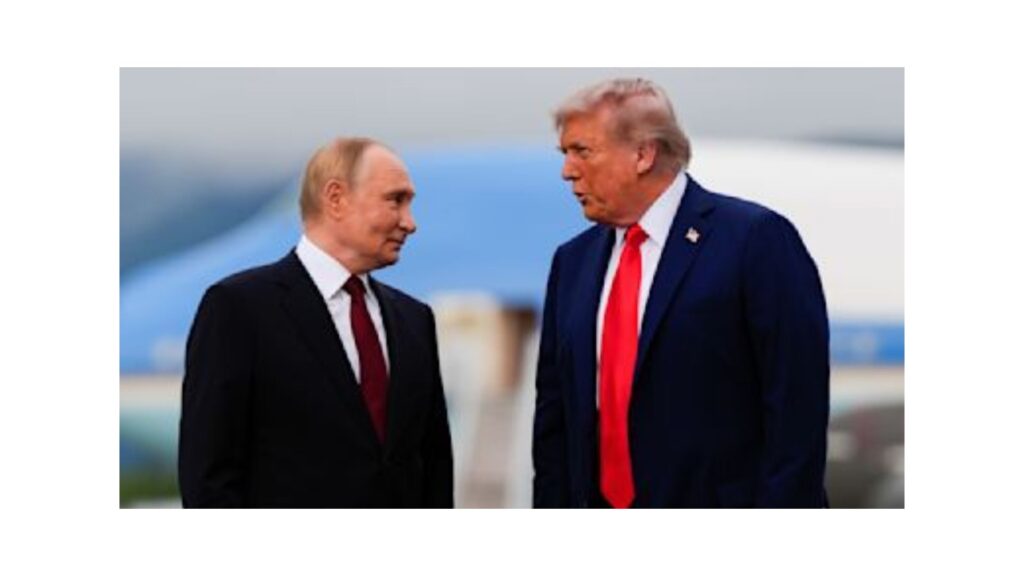
The U.S. President Donald Trump and the Russian President Vladimir Putin in Alaska
Two months since the highly hyped meeting between the U.S. President Donald Trump and the Russian President Vladimir Putin in Alaska, the prospects of a new stage in the development of the cooperation between Washington and Moscow seem to slip away rapidly. What seemed to be a promising meeting in the spirit of Alaska in August now is a place of mutual disappointment, stagnating diplomacy, and increasing tension in relation to Ukraine and arms control in particular.
The optimism experienced after the August 15 meeting in Anchorage has vanished according to the Russian Deputy Foreign Minister Sergei Ryabkov.
Also Read
Outrage in Naivasha as Residents Demand Answers Over Secretive Mall Construction on Public Land
Lawyer Lodges Complaint Over “Chaotic” Blankets & Wine Festival Experience, Seeks Compensation
Macron Faces Deepening Political Turmoil as Prime Minister Resigns After Just 27 Days
He regretted the fact that there was a loss of powerful momentum when Moscow was willing to repair relationship with the US and Washington responded not to show the same. We possess an edifice of relations, which is splitting and is falling,–said Ryabkov, alerting us to the fact that the cracks have now gone to the root.
A Weak Hope in the Kremlin
Although Ryabkov was pessimistic, Kremlin was trying to convey a more moderate message. President Putin informed journalists on Friday that complicated challenges like Ukraine and armament control still have to be studied deeper yet Russia is not ready to abandon the foundation of discussions that took place in Anchorage. His spokesman then clarified that Moscow had made some concessions in the Alaska negotiations, but only on the condition that Trump would be able to receive some similar steps by Ukraine and the European leaders.
This tone difference between the Russian officials highlights the fine line that Moscow is walking- between cozying and threatening as the nation tries to balance an ever riskier foreign affair environment.
Frustration and a Stumbling Agenda of Trump
On the American front, President Trump, who has been slightly successful in promoting peace initiatives in Gaza, has become overtly stressed due to his failure to broker a ceasefire in Ukraine. His demeanor towards Russia is now chilled in public and the two leaders do not have any fresh meetings. Another unoccupied job is the new ambassador to Moscow, and Washington has also not nominated a new one since June.
When Trump hinted that the U.S. may provide Tomahawk cruise missiles to Ukraine, it has earned a furious reaction in the Kremlin. Putin threatened that such an action would destroy the rest of the U.S.-Russia relations and lead to another round of conflict. The recent statement of Trump that Ukraine can potentially recapture all the lost territory and his rejection of Russia as a paper tiger has further intensified the divide.
Praise and Provocation: Moscow Mixed Signals
To keep communication channels open, there has been an alternated use of charm and challenge in Moscow, in a seemingly bid to maintain communication channels open. Recently, Putin proposed to unilaterally extend the deployment of nuclear arms beyond the hands-off period of the existing arms contract- should the same be done by Washington. Trump reacted favorably calling it a good idea, but the U.S. has not responded formally.
During a recent foreign policy conference, Putin further targeted the Trump domestic and applauded his peacekeeping operations in Ukraine and complimented people associated with the Make America Great Again movement. He praised Michael Gloss, the son of a retired CIA officer who was allegedly killed fighting with the Russian military in Ukraine, stating that he was the embodiment of the MAGA movement. Putin also denounced the killing of the Trump friend Charlie Kirk claiming that both men were representatives of the traditional values that Russians and Trump supporters shared.
These overtures have been reflected in the words of Kirill Dmitriev, the head of the sovereign wealth fund in Russia and a special envoy of Putin, who has highlighted the same ideological parallels between the movement of Trump and the values of Moscow, despite condemning the anti-Trump forces in the US. Even Yuri Ushakov, a Kremlin aide, said that Russia would approach the Nobel Peace Prize nomination of Trump.
Pungent Threats and Mounting Disillusionment
Through these signals, Moscow has not been chastening its warnings. Repeating what Putin had said previously, the provision of Tomahawk to Ukraine would be a red line, and it would entail direct military involvement on the part of the U.S., and intensify aggression to a wholly new level.
A more severe threat was given by the chairman of the parliamentary defense committee of Russia, Andrei Kartapolov, who threatened to intercept any U.S. missiles and attack their launch sites and retaliate in a manner that would hurt Washington. Ryabkov, in his turn, announced that in case of the U.S. nuclear test, Russia would test its nukes as well and disavowed any hope of a new nuclear disarmament or plutonium destruction pact.
Komsomolskaya Pravda, a pro-Kremlin newspaper, analyst Andrei Baranov concluded on the rising disillusionment in Moscow: “Following the summit in Alaska, it was hoped that Trump would further speak to Russia and take our interests into consideration. Now Donald has disappointed us with his habitual inconsistency in a complete way.
Now that the frost of diplomacy has fallen once more the old-time glory of Alaska seems but a transient illusion–a sunshine flash spoiled by old distrust and new facts.