Zimbabwe’s ZANU-PF Moves to Extend Mnangagwa’s Presidency to 2030
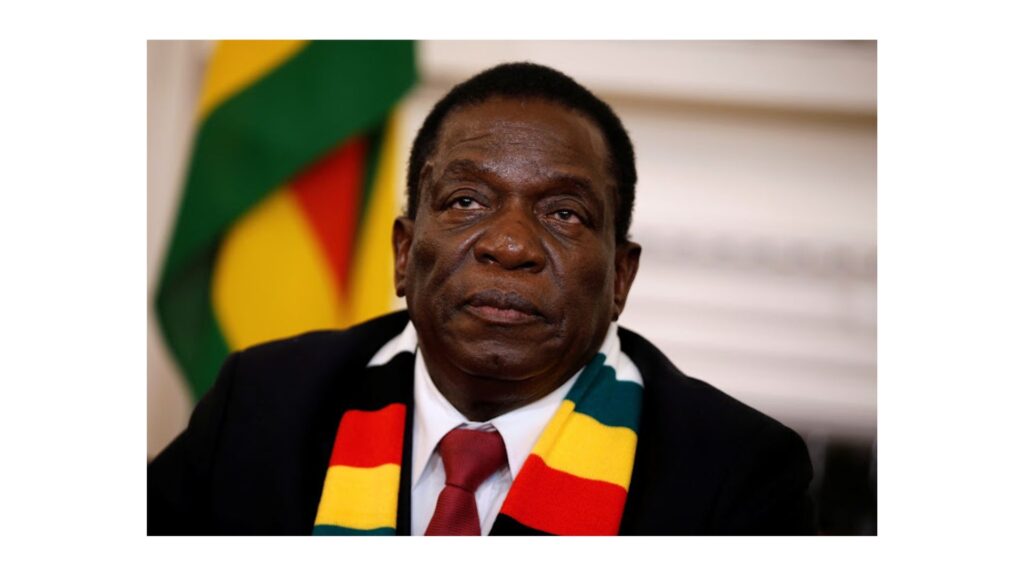
Zimbabwe's President Emmerson Mnangagwa
Zimbabwe’s ruling party, ZANU-PF, has resolved to push for constitutional amendments that would extend President Emmerson Mnangagwa’s tenure by two years, allowing him to remain in power until 2030.Enacted on a high-level party conference late Saturday, the proposal has been instantly and ferociously criticized by opposition people, who quickly described the manoeuvre as unconstitutional and as an insult to the very principles of democracy in the country.
The president is 83 years and currently in his second 5 year term which according to the current constitutional setup, should end in 2028. The move by the ZANU-PF to seek the amendment is an indication that it will seek to circumvent this set legal constraint, which caused alarm among pro-democracy organizations and opponents of the long-serving party.
ALSO READ
WHO Raises Global Alarm Over Toxic Indian Cough Syrups After Child Deaths
President Ruto Announces Raila Odinga to Be Accorded a State Funeral
Giving the formal directive and the reasons of the disputed resolution, Ziyambi Ziyambi, the secretary of the ZANU-PF legal affairs and Minister of Justice spoke to the delegates at the conference. He instructed that the party and the government were thus instructed to embark on the legislative amendments to complete the resolution, which he asserted, was essential in bringing continuity, stability, and a lasting transformation in the country.
This official directive presents the decision of the unilateral party as a necessary element in the further administrative and developmental course of the state where the concept of political expediency is being approached rather than the rigid observance of the constitution.
The answer of the disorganized but vocal opposition movement was immediate and unconditional. Among the most experienced politicians and the senior opposition leader, Jameson Timba, denounced the proposal as not only illegal, but also a gross abuse of power.
In a very strong statement released to the public on Sunday, Timba declared that Zimbabwe was a constitutional democracy, and that the primacy of its Constitution should not be compromised. He emphasized that a nation that was founded on democratic values could not, and should not be ruled by a simple resolution of the party conferences or partisan dictates that goes around the supreme law of the land.
Moreover, Timba demanded a clarification on both ends; the speaker of parliament and the minister of justice, whilst calling on the people to engage in civic vigilance and peaceful resistance of constitutionalism to what he viewed as assault of democracy norms.
The resolution occurs in a complicated context of domestic politics of the ZANU-PF itself. The move to extend the term of the incumbent creates turmoil in an already fragile internal succession struggle, including former army general Constantino Chiwenga, one of the central figures in the 2017 military takeover.
Chiwenga is the former perceived to be Mnangagwa chief internal opponent who is accused of treasonous behavior as a clear indication of the numerous factional undertones that brewed below the surface of the ruling party united front. In this context, the word extension can be interpreted to mean less do with national stability and more to do with the preservation of power base of the existing presidential block.
Even the President himself, who had earlier taken office after the 2017 military coup that ousted the founding leader Robert Mugabe, had earlier indicated that he had no desire to hang onto power until his constitutional tenure was finished. However, this is the direct opposite of the previous promises, as the present party declaration promises, which places in question whether the government is willing to peacefully and on time give up power.
In the eyes of the civil society, the move by the ZANU-PF is a crucial point of democracy in the future of the country. In their response to the reporters, Job Sikhala, the coordinator of the National Democratic Working Group, an advocacy group, described the resolution as a great provocation by a political party whose defined modus operandi has been historically predatory. He proposed that the move would represent the biggest challenge to the democracy in the country hinge on how the democratic forces will respond to this aggressive non-constitutional change of governance.
ZANU-PF has had continuous reign in the Southern African country since gaining independence with Britain in 1980. The party enjoys commanding majority in the house which is a contributing factor to the proposed change in legislation being a viable possibility even with the constitutional outlaws and the subsequent backlash.
The government is up against the odds of restoring the national economy and decreasing its debts, something the party loyalists claim requires the long-term security assured by an unending presidential term. However, to the opponents, the extension of the term poses a risk of derailing the democratic gains that are needed in the long run to bring national recovery.