IG gets sweeping powers to reorganise DCI, police commands under new rules
IG gets sweeping powers to reorganise DCI, police commands under new rules
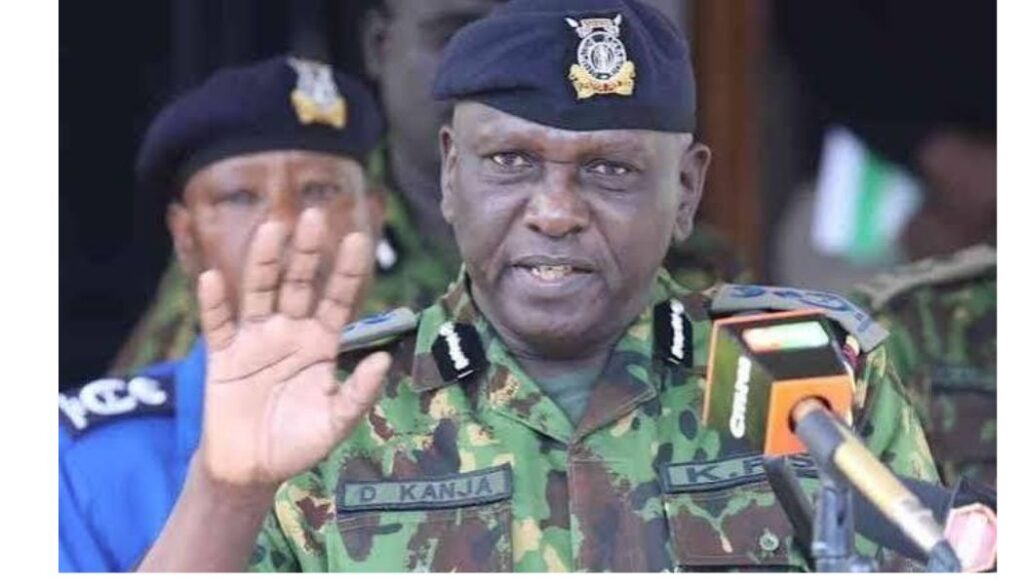
Inspector-General of Police (IG) Douglas Kanja has gazetted sweeping changes to the National Police Service Standing Orders, introducing a new legal framework that reorganises the structure, command and operations of police formations across the country.
The changes, contained in a special issue of the Kenya Gazette published on July 30, repeal the existing Chapter Seven of the National Police Service Standing Orders and replace it with a new framework governing the organisation of the Kenya Police Service (KPS), Administration Police Service (APS) and the Directorate of Criminal Investigations (DCI).
Under the new rules, the Inspector-General is empowered to establish, merge, or abolish police formations, units and components, provided such changes receive his approval and are made in writing.
The amendments also require the IG to issue written directions whenever conflicts arise over the functions of different police formations, units or investigative commands, to improve coordination within the service.
Further, the new Standing Orders require the IG to approve all operational guidelines and standard operating procedures for police formations, units, bureaus, investigative commands and other components of NPS.
Under the new changes, Kenya Police Service, which is currently headed by DIG Eliud Lagat, will now comprise the General Service Unit (GSU), Kenya Police Traffic Unit, Presidential Escort Unit (PEU), and the Kenya Airports Police Unit (KAPU).
Others will include the Kenya Railways and Ports Police Unit, K9 Police Unit, Nairobi Metropolitan Police, Diplomatic Police Unit, Tourist Police Unit, Marine Police Unit, Quick Response Unit, and the Government Vehicle Check Unit.
The Administration Police Service, currently headed by DIG Gilbert Masengeli, will continue operating through specialised formations which include the Border Police Unit (BPU), Anti-Stock Theft Police Unit (ASTU), and the Critical Infrastructure Police Unit (CIPU).
KRA to use NSSF data to track employees failing to remit PAYE
Somali President orders all senior officials holding Kenyan Passports, IDs to surrender them
UN issues warning to Museveni over crackdown on opposition and activists
IEBC responds over plan to scrap live transmission of presidential election results
Others under the APS will include the Judiciary Police Unit, Energy Police Unit, Mining Police Unit, Water Police Unit and the National Government Administration Police Unit.
The DCI, currently headed by DG Amin Mohamed, has also undergone a major restructuring and will now include key investigative units including the Counter-Terrorism Bureau, National Anti-Narcotics Investigations Bureau, Crime Research and Intelligence Bureau, NPS Forensic Laboratory, Kenya Airports Criminal Investigations and Kenya Railways and Ports Criminal Investigations.
In addition, the DCI has been granted powers, in consultation with the Inspector-General, to establish command structures, determine deployment of investigative formations and reorganise specialised units, sub-units, sections and desks to improve operational efficiency.
At the same time, the amendments further align police training institutions under a unified National Police Service training system, with all formations expected to operate in accordance with approved policies, operational guidelines and standard operating procedures.
According to the government, the reforms are intended to strengthen coordination, clarify command structures and improve the management of police operations.
Senior police officer arrested over links to kidnapping
James Orengo welcomes Aisha Jumwa to Linda Mwananchi
Babu Owino installed as leader of Nairobi Luo Council of Elders
Kalonzo discloses planned Monday meeting with Uhuru Kenyatta