Activist Hanifa Adan quits Radio Generation after four months
Activist Hanifa Adan quits Radio Generation after four months
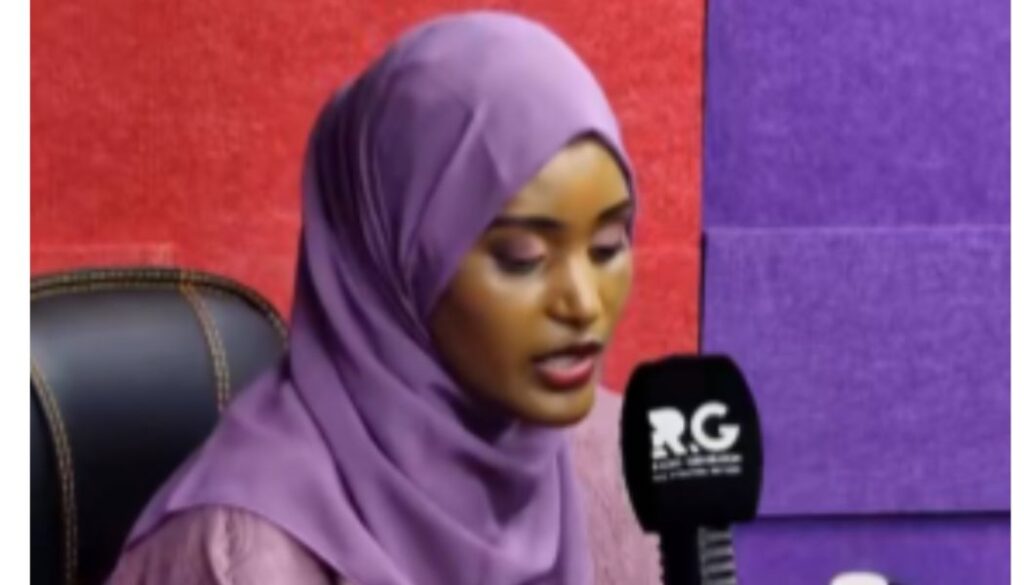
Radio host and activist Hanifa Adan has quit Radio Generation after four months at the station, ending a stint that transformed her understanding of journalism and activism.
Hanifa, who joined the station as a non-trained journalist on April 3, announced she had left the radio station in a statement on August 5.
During her time at the station, Hanifa co-hosted The Generation Report alongside Mung’ala Mbuvi, and according to her, her interview with Member of Parliament for Kimilili Constituency Didmus Barasa on Monday, August 3, was her last assignment.
“My interview with Didmus Barasa was my last one at Radio Generation. By then, I had already resigned and was moving on to something else,” stated Hanifa.
Adding, “It was probably the interview that best captured what those few months had taught me when I joined the station; I was far more of an activist than a journalist.”
Hanifa, who came into the limelight through the infamous 2024 Gen-Z protests, explained that she initially struggled to separate activism from objective reporting because she held strong views on political accountability and public issues.
This has resulted in her being called “emotional and biased,” particularly with regard to United Democratic Alliance (UDA) politicians.
Hanifa acknowledged that she struggled with this, particularly with the realisation that journalists must question everyone regardless of personal opinions, which greatly irritated her.
KNEC releases 2025 KCSE e-certificates; How to download
DCI confirms arrest of DCP blogger Justin Kinyua
Outrage as man dies shortly after being released from Muthaiga police station
University lecturers threaten nationwide strike over unpaid CBA arrears
“I was constantly told I was emotional and biased, especially towards UDA politicians. It annoyed me, but I also had to be honest with myself that journalism isn’t activism. You don’t get to choose who you hold to account. You ask the questions, no matter who is sitting across from you.
That was one of the hardest adjustments I had to make,” Hanifa stated.
She described her experience interviewing MP Barasa as showing the challenge of balancing personal beliefs with newsroom responsibilities while seeking answers from public figures on issues affecting citizens.
Hanifa said she had previously refused to interview some politicians because she believed that offering them a platform conflicted with her activist position at the time.
She gives the example of her declining to interview Kasmuel Mc’Oure, a vocal Orange Democratic Movement (ODM) Youth Wing leader, once part of the activism scene, before realising activist instincts could not define her approach in a newsroom.
Hanifa said the eventual conversation with Kasmuel remained respectful and helped reinforce the difference between advocacy and professional journalism in public conversations.
IEBC appoints Ruth Kulundu as new acting CEO
Gachagua fires back at Munya, Muturi over call to dissolve their parties
Eldoret college director arrested for issuing forged certificates to students
DCP has no place in Azimio and won’t join the coalition; MP Gakuya
PSC to include diploma and TVET graduates in government internships