Nairobi Water Official Sentenced for Presenting Forged Academic Papers
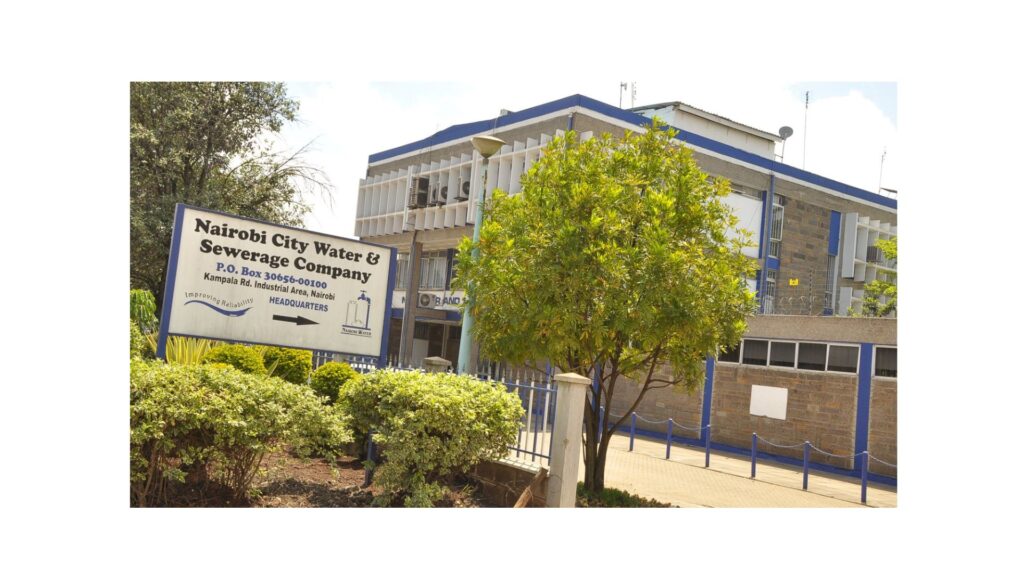
Nairobi City Water and Sewerage Company Offices
One of the top employees at the Nairobi City Water and Sewerage Company has been found guilty of forging an academic certificate in order to get a job at the utility firm.
This officer, Joseph Kihara Kaburugu was convicted of forging a false Diploma in Sports Science Management which he had argued had been awarded by the Jomo Kenyatta University of Agriculture and Technology (JKUAT).
Also Read
Raila Odinga’s Silence Revives Africa’s Tradition of Political Secrecy
Macron Faces Deepening Political Turmoil as Prime Minister Resigns After Just 27 Days
Eldoret Woman Admits Buying Missing Boy for Ksh.30,500, Claims She Couldn’t Conceive
The decision is a major milestone in the quest by the Ethics and Anti-Corruption Commission (EACC) to reduce the use of forged academic documents in the provision of public services.
As cited in the court records, the problems of Kaburugu started when an internal check-up cast doubt on the reality of his qualifications. The case was sent to the EACC to investigate. Following intensive investigations, the anti-graft agency determined that the diploma that the accused was fronting was not authentic and had never been given out by JKUAT.
Kaburugu was later charged in court before the Milimani Anti-Corruption Court before Chief Magistrate Harrison Barasa on January 21, 2025. At the hearing, he was charged with two counts–forgery and uttering a false document. He however, was found not guilty to the two counts.
The court case was conducted and the prosecution provided evidence to support the prosecuted of forging the certificate. The representatives of JKUAT testified that he has not received any such diploma, and the representatives of EACC investigators described the way the document was used to get a job. Defense on the other hand claimed that there was not enough evidence to indicate intent on the part of Kaburugu.
Several months later, the ruling was announced in September 30, 2025. Magistrate Barasa decided that the prosecution had not effectively demonstrated that the charge of forgery had been met but the evidence trying to incriminate Kaburugu on the uttering of a false document was overwhelming. He was hence found not guilty in forgery as in Section 215 of the Criminal Procedure Code; however, guilty of giving a false document as was in violation of Section 353 of the Penal Code.
Sentencing was done on October 2, 2025. Magistrate Barasa in his judgment said that offences that use false documents tend to destroy integrity in institutions of government and deter the trust in the processes of recruitment. Kaburugu was fined Ksh.100,000, and in case he does not pay the fine, he will be sentenced to one year in prison.
The belief highlights the growing skepticism that is being leveled on scholarly credentials in the government. Government agencies have made the recent years more aggressive in terms of trying to eliminate the employees who used fake papers to secure jobs or promotions. Another lesson the case teaches is that the falsification of credentials has severe legal effects on both civil servants and people seeking jobs.
To Kaburugu, the decision does not only have financial and legal repercussions, but also casts doubt on his ongoing suitability to work in the Nairobi City Water and Sewerage Company, an organization that carries with it the key roles of providing important civic services.