Tanzania’s Tundu Lissu Treason Trial Opens as Tanzania Heads Toward Election in Few Weeks

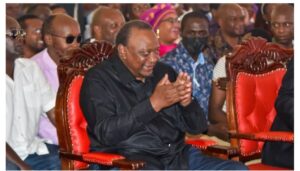
Tanzania Opposition Leader Tundu Lissu during a Court session in Tanzania
Tanzanian opposition leader Tundu Lissu has been put on trial over treason, only weeks before the country goes to the polls in an election that his party, CHADEMA, is not allowed to take part. The case, one that has attracted much publicity both in the domestic and international front is being seen by many as a test of Tanzanian democracy and human rights case.
In April, Lissu, the 2020 presidential election candidate, was arrested, prosecutors claimed he gave a speech that had incited rebellion in the masses and was aimed at interfering with the next national vote that was to be held later in the month.
Also Read
Kenyan Entrepreneurs in Tanzania Exempted from Suluhu’s Restrictions on Certain Foreign-Owned Businesses
Record-Breaking Exam Season as Kenya Prepares for Largest National Assessments
Opposition Sounds Alarm on Kenya Pipeline Privatization, Cites Corruption Concerns
The opposition character has been a staunch critic of the incumbent Chama Cha Mapinduzi (CCM) party headed by President Samia Suluhu Hassan, and has severally asserted that the electoral system in Tanzania is highly biased towards the ruling party.
Prior to his arrest, Lissu had stated publicly that he was going to boycott the coming election without any significant reform to make it fair and transparent. He claimed that the present system perpetuates the dominance of CCM that has not been interrupted since Tanzania got its independence in 1961.
The indictment against Lissu has not been categorically responded to in court but his counsel claim that the case is politically motivated and directed to clamp down on any form of dissent at the expense of the polls. His counsel has maintained that the charges are false to get rid of one of the most outspoken critics of the government and deter opposition activists to come out.
To further fuel the controversy, the court has barred the live broadcasting of the trial following a request by the state prosecutors who said that the trial would be necessary to keep the identity of witnesses concealed due to protection of witnesses. Opinion leaders see the move, however, as part of an effort to minimize transparency and manipulate the story around one of the most politically sensitive cases in Tanzania of recent years.
Lissu has had her career in politics characterized by both perseverance and threat. In 2017, he just escaped an assassination attempt trying when he was shot 16 times outside his house in Dodoma. Although he survived the attack, he spent months in the hospital, but no suspects have ever been arrested and prosecuted, which also contributes to the issue of impunity and political violence in Tanzania.
The fact that Lissu is finally being put on trial has raised the eyebrows of the leadership and the human rights record of President Hassan and her government. Hassan received extensive applause when she first came to power in 2021 after the demise of her predecessor, John Magufuli, as she was seen to have relaxed the crackdown on political speech, released imprisoned opposition leaders, and opened up the media to freedom of expression. But apparently those initial reforms have stopped and recent months have been characterized by resurgence of repression.
The human rights organizations have accused the government of employing the methods of intimidation such as the alleged kidnappings and arrests of political activists and government critics. There have been a number of high-profile individuals who have been reported missing or being arrested in mysterious ways and this has raised concern among the local and international watchdogs.
The National Electoral Commission in April denied CHADEMA the right of participating in the October 28 election alleging it did not sign a mandatory code of conduct. The ruling virtually barred the mainstream opposition party in Tanzania off the ballot. The head of the second-largest opposition was also disqualified by the commission, further reducing the number of candidates with a small probability to oust the ruling CCM.
Even with increasing criticism, President Hassan continues to insist that her government believes in the observance of human rights and the rule of law. Last year she had an enquiry into the so-called kidnappings of government opponents, but no official results have been made public.
As the general election draws nearer, the trial that Lissu is facing has turned iconic because of the wider tensions that define the political landscape that is the case in Tanzania. The opposition leader proponents are viewing his persecution as a direct assault on democracy and proponents of the government are saying that the rule of law should take its course.
The result of the trial of Lissu, as well as the election itself, will probably have far reaching consequences to the image of Tanzania as one of the most stable countries in East Africa. To most of the people of Tanzania, the proceedings is not merely a court fight, but a historic time on the way forward of the nation on democracy, justice, and human rights.