Raila Odinga’s Silence Revives Africa’s Tradition of Political Secrecy

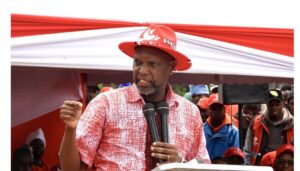
Former Prime minister and leader of the ODM party Raila Odinga in an event
The fact that Raila Odinga has not been seen in the media recently has triggered another round of gossip regarding the health of one of the most prominent political leaders in Kenya. The veteran opposition leader and head of the Orange Democratic Movement (ODM) is 80 years old and has been a formidable voice in the national politics over decades – hence the outcry of silence has caused so much unease among the people.
Also Read
Government Urges Kenyans to Collect Over 400,000 Uncollected IDs Amid Low Voter Registration
Gideon Moi’s Withdrawal from Baringo Race Signals 2027 Political Realignment, Says CS Murkomen
Tanzania’s Tundu Lissu Treason Trial Opens as Tanzania Heads Toward Election in Few Weeks
There have been unsubstantiated reports in social media that Odinga is hospitalized in a foreign country, probably in Europe, to seek treatment. Others claim that his doctors had recommended him to drive slowly because he was tired. ODM then responded, by promptly rejecting such accusations as political theatre, and claiming that Deputy President Rigathi Gachagua, Wiper Party leader Kalonzo Musyoka and other opponents were engaging in falsehoods and even spreading AI-generated images purporting to show a seriously ill Raila.
The rumours were vehemently denied by the Odinga spokesperson Dennis Onyango who assured the citizens that the opposition leader was doing well and had only gone to other countries to conduct normal business. Onyango, on his part, stated that Raila has never been a secretive person with regard to his health conditions as some of his frustrated opponents want.
However, rather than alleviating popular concerns, these clarifications have created further speculation- reveling even more the root of the problem, which is beyond Kenya- the longer held culture of secrecy as regards the state of the political heads in Africa.
The trend is not new and disturbing across the continent. In 2010, the late President Umaru Musa Yar’Adua of Nigeria disappeared without being sighted and his officials told the world that he was on rest. The trend is common and disturbing across the continent. The same happened in Zambia with Michael Sata; his government ignored any news of bad health until he suddenly died in one of the London hospitals in 2014. In 2021, the late president of Tanzania John Magufuli, who refused to admit that COVID-19 exists, was not seen publicly again, under the pretense of having been infected with a sinus infection. A week later, he too was dead.
Transparency is the opposite of such secrecy. The white house regularly releases detailed health summaries of the President in the United States, and the United Kingdom routinely releases information to the people following the check-ups of the Prime Minister. African countries, however, in most of them, consider treating even minor ailments as a state secret – their citizens are left to gossip, leak, and spread rumours.
Analysts attribute the cause of this secrecy to the political culture in Africa where power is mostly regarded as a divine and sickness a sign of weakness. Leaders are afraid that by showing that they have some health issues, they can make their opponents bolder or weaken their support ground. Nevertheless, such lack of transparency is a very costly feature, it creates mistrust, conspiracy theories and undermines the trust of the people.
It is ironic that the very leaders that scream fake news tend to provide a good environment where they do not tell the truth. During the era of social media and AI, having no news to say only increases guesses.
According to his supporters, Odinga has already been open about his health in the past, revealing his surgery in 2010, and the diagnosis with COVID-19 in 2021 publicly. Nevertheless, the recent episode indicates that citizens now require leaders to be more open with them not as a favor, but as a compulsion.
Eventually, the true illness in African politics can be their secrecy rather than the hidden illnesses of the leaders. Being a real leader they say, is not watered down by being honest but is characterized by it. The rumours are the only things that multiply because in the darkness of silence, there is nothing that multiplies.