Kenyan Police Destroy Toxic Chemicals Used in Illicit Drug Manufacturing at Namanga Border
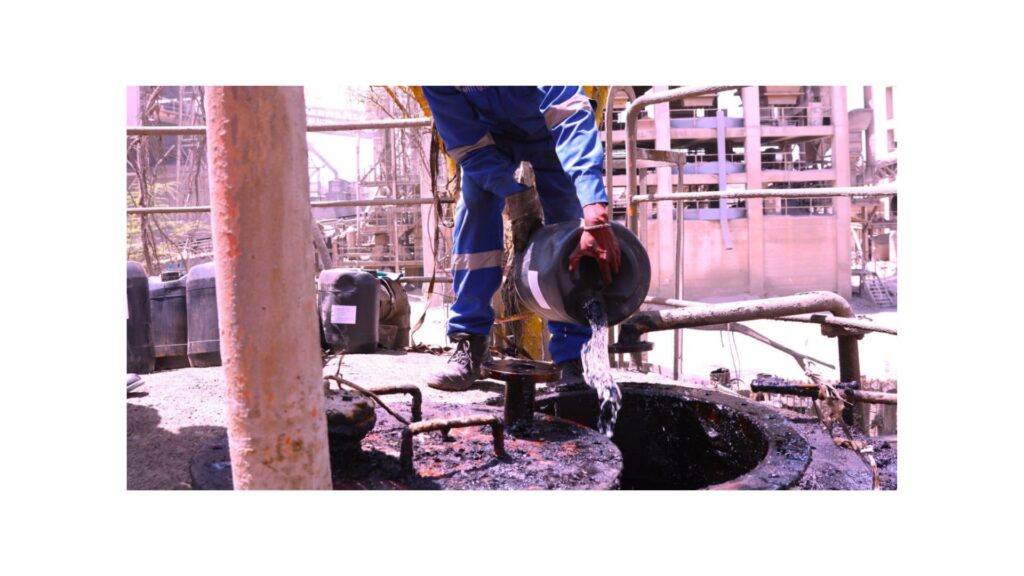
A picture of illicit brew being destroyed
As a potent indication of the relentless efforts of the government to address transnational organized crime, the government through the Directorate of Criminal Investigations (DCI) has officially announced the destruction of a giant stock of poisonous chemical, meant to be used in mass production of illegal narcotics. A well planned operation carried out with great care and openness, it is a great triumph in this war against drug trafficking and production in the East African continent.
Also Read
Ex-husband of Narok woman attacked by brothers freed on Ksh. 800,000 bond
Gov’t in Final Talks With SRC to Resolve Lecturers’ Strike as Ogamba Urges Teaching to Resume
KDF Cautions Kenyans Against Fraud and Bribery in Upcoming Recruitment Exercise
It had been destroyed using special environmental and safety measures by burning the chemicals which are very important ingredients in the production of harmful illegal drugs, at the East African Portland Cement (EAPCC) plant at Athi River, Machakos County. It was the high profile operation led by the DCI specialized Anti-Narcotics Unit (ANU) that has been at the fore in dismantling those intricate criminal cartels that run their businesses across the borders of the country.
Friday, October 10, 2025, the day of the declaration of the destruction of the agent, which was represented to the population and the world in general through the official communication channels of the DCI, became more of an update of the case and a direct threat to criminal forces.
Exposing a Transnational Network
The drugs were destroyed in one of the larger seizures in the country that took place in September of the year 2024 at the Namanga border which is a very important entry point between Kenya and Tanzania. The initial sting operation, according to the DCI, was the climax to a long, multi-agency investigation, which was able to destroy a sophisticated transnational network.
This syndicate was also said to be in the high stages of developing an expansive and industrial sized drug manufacturing laboratory. Their ambition was terrifying since the lab was also supposed to provide illegal drugs to both the local markets that were expanding and the international drug markets that were profitable.
This complexity in the operation underscores the fact that drug crime is also changing in the region to become less of a transit route and more of an active production centre. The fact that this manufacturing plot has been identified and neutralized long before it could begin operations meant that potentially hundreds of millions of shillings’ worth of narcotics could never reach communities and a well-resourced criminal network was severely crippled.
An Unambiguous Signal of No Tolerance
Talking about the seriousness of the damage, the DCI Director of Planning Mr. Bernard Walumoli, stressed the strategic significance of the operation and its contribution to national security and social wellbeing. According to him, the destruction of such precursor chemicals sends an irrefutable message to criminal gangs across the world that Kenya will not allow its space to be used as a refuge to produce and trade in hazardous drugs.
Additionally, Mr. Walarmoli explained the long term plan of the Directorate. He assured that the DCI is never relenting in developing its capabilities, and that the agency is actively acquiring modern investigative equipment, developing its forensic capabilities, and developing strategic alliances both within the United States and beyond. It is an essential proactive, technology-driven process, he argued, to allow the DCI to be able to successfully predict and stay ahead of the ever-evolving methodologies used by organized criminal networks. The determination is evident, to create an impregnable wall against illegal operations that jeopardise the stability of the country.
Assuring Transparency and Accountability
More importantly, the operation was not only praised as having successfully intercepted the chemicals but also the high level of procedure rigor that was applied in destroying them. The head of the Anti-Narcotics Unit emphasized that the exercise was a show of accountability and transparency in handling is seized exhibits.
The Director observed that by destroying the substances permanently, the DCI, in effect, links the loop in the event that the chemicals are diverted, stolen, or that they get back into the society unlawfully. This is a procedural protection that is utmost in the preservation of public confidence and the eradication of corruption that entails the management of valuable items that are seized.
To ensure control and adherence to legal and environmental requirements, the destruction was conducted under the attention of the representatives of various major regulatory and judicial bodies. These were Judiciary officials, Office of the Director of Public Prosecution (ODPP), Government Chemist, National Environment Management Authority (NEMA) and Pharmacy and Poisons Board (PPB). The existence of these independent bodies guarantees the fact that the process of disposal can be implemented to the maximum level of safety, legality, and ecological responsibility.
International Cooperation and Future Prospect
The DCI also credited the invaluable aid and cooperation that it got with the international partners especially with the help of the Drug Enforcement Administration (DEA). This form of international collaboration highlights the fact that the war against drug syndicates needs an integrated approach, whereby intelligence and resources are shared on a trans-continental level, in order to adequately cripple the activities of the syndicate which in many cases cut across all levels.
The success of the Namanga operation followed by the destruction of the precursor chemicals is a great testimony to the strong and uncompromising zero-tolerance policy of the government towards narcotics. It is a strong message to the criminal organizations that seek to use Kenya to the fullest potential through its extensive and busy borders in criminal commercial interest.
The country enhances its image as an active, proactive participant in the regional counter-narcotics activities as the DCI keeps building up its investigative capabilities and strategic partnerships and strives to ensure that its citizens are not affected by the devastating effects of the illegal production and trade of narcotics.