Cameroon’s 92-Year-Old President Paul Biya Seeks Eighth Term Amid Growing Calls to Step Down
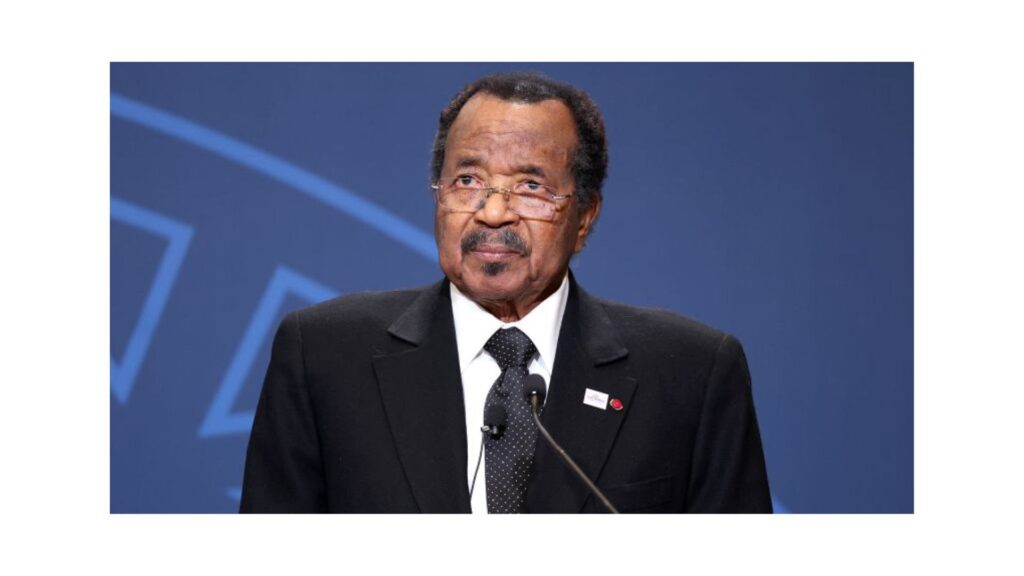
A picture of Cameroon President Paul Biya
Paul Biya is a long-serving president of the Republic of Cameroon, who will be running his 8th term of office as president in the forthcoming election in October 12 2018. This is despite an increasing domestic and international pressure on him to step down after over 40 years in power.
The world’s oldest sitting leader, who is 92 years old, made the announcement in July and said that he was doing so upon the urging of many and repeated requests of his supporters. However, the current election cycle has been characterized with unprecedented attack even by the very people who were very close to him.
Also Read
PayPal Invests Ksh.12.9 Billion to Boost Digital Transformation Across Middle East and Africa
US Extends AGOA Trade Deal for One Year, President Ruto Announces
Kenya Urges Fresh Investment in Cement Industry as East African Portland Faces Stake Sale
The biggest hurdle was presented by Archbishop Samuel Kleda who said on French radio last December that it was not realistic to expect Biya to remain in the leadership of the country. This was then preceded by defections of two cabinet ministers representing the politically powerful northern regions and both of them openly questioned the president on whether he could govern effectively.
The strongest backlash was the one by Biya within his family members, as his 27-year-old daughter, Brenda Biya, posted in the Tik Tok that her father had contributed to suffering of too many people and that citizens had to vote him out. Even though she has deleted and retracted the statement later, it is still spread among the critics of the government.
In spite of these calls of change, Biya is still a fearsome challenger with the support of the same tools that have helped him stay in power in the last four decades, a loyal military, established patronage networks, weak institutions, and a divided opposition. Arrey Ntui, the senior analyst at the International Crisis Group claims that loyalty to the president and the system is absolute as no one in the ruling structure can defy the ruler.
Health Hazards and Pre-Established Control
In 1982, Biya came to power after replacing his mentor Ahmadou Ahidjo who was later forced to exile. He has ever since survived a coup attempt (1984) as well as many political crises. In 2008, the then president lifted term limits, which allowed him to carry on with his rule and easily won elections in 2011 and 2018 when there were rampant claims of vote rigging and intimidation.
In the meantime, the failing health of Biya is attracting more attention. His few appearances lately and his 42-day absence to the public last year has become the source of speculation as to whether he is fit to rule. Although the government claims these issues are mere fantasy, it has prohibited general discourse on his health and this has only resulted to increased suspicion. In the meantime, citizens are still grappling with low infrastructures, intermittent power, insufficient supply of clean water and waste disposal.
Concerns with Electoral Fairness
The opponents argue that the political level-playing field has again been tilted in favor of Biya. In July, the court prevented the main challenger of Biya in 2018, Maurice Kamto, to run on grounds of a technicality concerning the registration of his party as a candidate in the court. The move was condemned by Human Rights Watch which cautioned that it compromised the credibility of the election.
Kamto, the leader of the protests, was arrested in 2019 following protests that he had claimed had seen Biya win in 2018, accused of insurrection (including the death penalty). Published later in the same year, his experience was a chilling effect to the resistance. The police lock up or the threat of it keeps the opposition in check, analysts say, and not only among politicians.
Raoul Sumo Tayo, the senior researcher at the Institute of Security Studies, says that being afraid of being spied on nowadays is a normal way of life. Whenever you hire a taxi in Cameroon, you are not sure who the driver answers to. Humans remain quiet to save their families and that quietness fortifies the regime he said.
With the looming election, the issue of age, the wellbeing of Biya and the increasing social and economic vices of Cameroon casts doubt on the future of the political landscape of this country. However, having a loyal inner circle and divided opposition, nobody can anticipate significant change at the ballot box.